
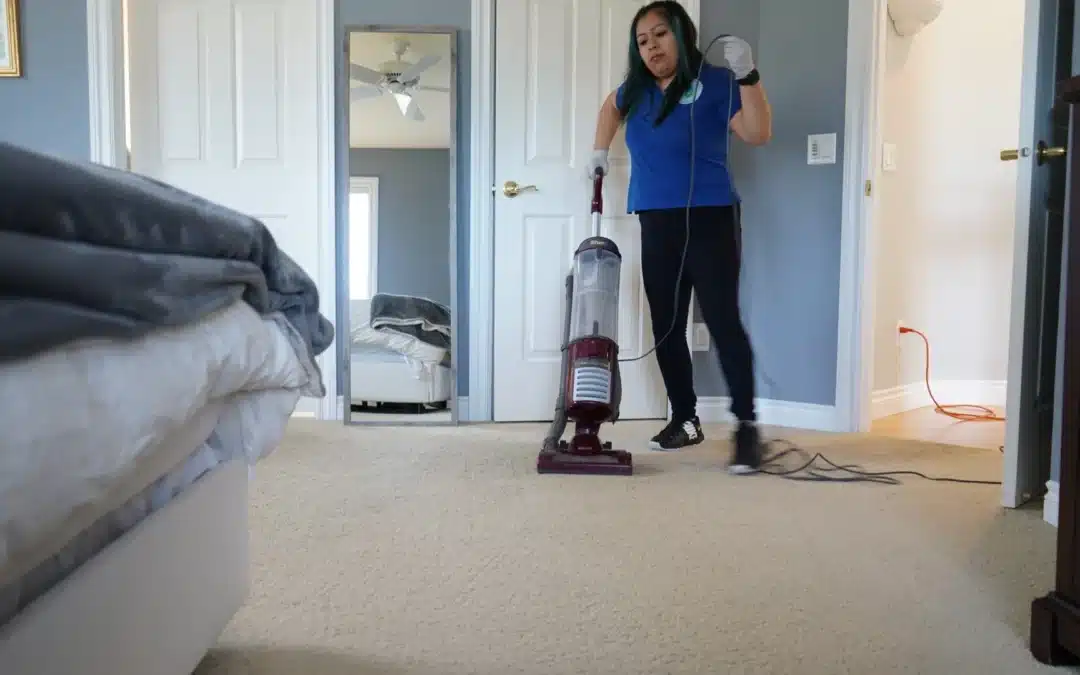
The right cleaning frequency depends on how fast your home generates mess, not on what your neighbor chose. Weekly cleaning suits high-traffic households with kids or pets. Biweekly cleaning fits most standard households and is the most common schedule homeowners choose. Monthly cleaning works only for smaller, low-traffic homes with strong daily upkeep habits.
The sections below walk through each option so you can match the schedule to your actual household, not a guess.
What’s the Difference Between Weekly, Biweekly, and Monthly Cleaning?
Weekly, biweekly, and monthly cleaning differ in visit interval and in how much buildup accumulates before each visit. Weekly service means a cleaning crew visits every 7 days. Biweekly service means a visit every 14 days. Monthly service means a visit every 28 to 31 days.
The longer the gap between visits, the more a home shifts from routine maintenance to partial recovery cleaning.
| Frequency | Visit interval | Condition between visits | What the visit actually does |
|---|---|---|---|
| Weekly | Every 7 days | Stays near a clean baseline | Maintenance clean — minimal buildup to address |
| Biweekly | Every 14 days | Manageable with light daily upkeep | Maintenance clean with a moderate reset |
| Monthly | Every 28–31 days | Noticeable buildup in active households | Partial recovery clean — more time on grime, less time on extras |
A maintenance clean keeps a home at a consistent standard. A recovery clean restores a home that has already slipped. The longer the gap, the more a visit leans toward recovery. For a look at the standard tasks a crew works through on each visit, see what a house cleaner does.
How Often Should You Clean Your Home? (Quick Answer)
Most Madison-area households do best on a biweekly schedule. It balances cost against how quickly a typical home with kids, pets, or two working adults accumulates dirt.
Homes with three or more people, multiple pets, or young children usually need weekly service to stay ahead of daily buildup. Homes with one or two adults, hard flooring, and consistent daily tidying can often stretch to monthly and still keep a reasonable baseline.
Weekly Cleaning: Who It’s For and What to Expect
Weekly cleaning is the right schedule for households that generate mess faster than they can keep up with it themselves. A crew visiting every 7 days never has to dig out old buildup, so each visit stays a true maintenance clean.
Weekly service fits:
- Families with young children who create daily messes in kitchens, bathrooms, and play areas
- Households with two or more pets, especially dogs that shed or track in dirt
- Homes with high daily foot traffic from multiple working adults or frequent guests
- Households where someone has allergies or asthma and needs dust and dander controlled consistently
Because buildup never has time to set in, weekly visits tend to move faster per visit than biweekly or monthly visits on a comparably sized home.
Biweekly Cleaning: Who It’s For and What to Expect
Biweekly cleaning is the most common schedule homeowners choose because it balances cost against a manageable level of buildup between visits. A visit every 14 days gives a crew enough of a gap to do a real reset, without letting grime harden the way it does over a full month.
Biweekly service fits:
- Couples or small families without young children
- Households with one pet and moderate daily activity
- Homeowners who handle light tidying — dishes, wiping counters — between visits but don’t have time for deep cleaning
- Homes in the 1,500 to 3,000 square foot range with a standard mix of hard flooring and carpet
Biweekly service works because two weeks is short enough that soap scum, grease, and floor buildup haven’t fully bonded to surfaces yet. That keeps each visit closer to maintenance than recovery.
Monthly Cleaning: Who It’s For and What to Expect
Monthly cleaning works only for a narrow group of households: one or two adults, no pets, mostly hard flooring, and consistent daily upkeep. A four-week gap gives dirt, soap scum, and grease time to bond to surfaces, which turns the visit into a partial recovery clean rather than routine maintenance.
Monthly service fits:
- Single occupants or couples with low daily foot traffic
- Vacation homes or secondary properties that sit empty most of the month
- Households that already vacuum, wipe counters, and clean bathrooms on their own between visits
Families with children, homes with pets, or households with carpet in main living areas typically find monthly cleaning isn’t enough. Buildup compounds faster than a once-a-month visit can fully reset.
How Pets Affect Your Cleaning Frequency
Pets shorten the window a home can go between cleanings because fur, dander, and tracked-in dirt accumulate daily, not just on cleaning day. A single cat or a short-haired dog with mostly hard floors has a smaller impact than two large dogs in a home with carpet.
Shedding hair collects along baseboards and under furniture. Paw traffic carries in dirt and moisture, and dander settles on surfaces throughout the home between visits.
Homes with one shedding dog typically need biweekly service at minimum. Homes with two or more large dogs, especially with carpet in main living areas, often need weekly service to stay ahead of it.

How Household Size and Daily Habits Affect Your Cleaning Frequency
A home’s size and occupant count set the baseline cleaning load, but daily habits determine how far that baseline stretches between professional visits. A single adult in a 1,200-square-foot condo who keeps up with daily tidying can often go three to four weeks between visits and still get a genuine maintenance clean.
A family of four in a 2,800-square-foot home with kids moving through multiple rooms daily almost always needs biweekly service to keep pace with what the household generates.
The honest variable is how much daily maintenance actually happens between visits — wiping counters each evening, keeping bathrooms picked up, running a vacuum on a fixed schedule. A household that skips these steps needs a shorter gap between professional visits than one that keeps up with them.
How Wisconsin Seasons Affect Your Cleaning Schedule
Madison’s seasonal changes shift how much cleaning a home needs, and a schedule that works in one season can fall short in another. Winter brings road salt, slush, and tracked-in grit from November through March, which concentrates at entryways and on hard flooring near doors.
Spring mud season, as snow melts through March and April, tracks moisture and dirt indoors at a higher rate than any other time of year. Late spring and early summer bring pollen season, when trees and grasses coat windowsills and horizontal surfaces within days of windows being opened.
Households that hold a biweekly schedule comfortably through the rest of the year often benefit from a temporary shift to weekly service during peak mud season or peak pollen weeks. They can shift back once conditions settle.
Does Cleaning Frequency Affect Cost?
Yes, cleaning frequency affects both the cost per visit and the total monthly cost, and the two move in opposite directions. Longer gaps between visits mean more buildup, and more buildup means more time on site per visit, so monthly visits typically cost more per visit than weekly ones for the same home.
At the same time, fewer total visits per month usually means a lower overall monthly cost with monthly or biweekly service compared to weekly.
The trade-off only holds if the home can genuinely maintain a clean baseline between visits. If it can’t, the “savings” from a longer gap gets absorbed by a home that looks clean for a week and then slips for the rest of the period — the actual cost most homeowners don’t account for when they choose frequency by price alone.
For a full breakdown of what’s included at each level, request a quote and we’ll walk through it for your specific home.
Can You Switch Cleaning Frequencies Later?
Yes, cleaning frequency isn’t a fixed, permanent choice, and most homeowners adjust it as their household changes. A household that starts on a monthly schedule and adds a dog often moves to biweekly.
A family on a weekly schedule may shift to biweekly once kids are older and out of the house more. Seasonal shifts — Madison’s mud season or pollen weeks — are also a common reason to bump up frequency temporarily rather than commit to a permanent schedule change.
How to Decide Which Schedule Is Right for You
The clearest way to pick a schedule is to be honest about how fast your home looks messy again after a cleaning, not about what frequency sounds impressive or economical. Ask these questions:
- Does the home feel messy again within a few days of a cleaning, or does it hold up for a week or more?
- Are you doing meaningful cleaning work yourself between scheduled visits?
- Do kitchens and bathrooms build up noticeably fast in your household?
- Do you have pets, young children, or high daily foot traffic?
- Is your home under 1,500 square feet with one or two low-activity occupants?
If the home slips fast and you’re doing real cleaning work between visits, a shorter interval — weekly or biweekly — is the better fit. If the home holds its baseline well and daily habits are already doing the heavy lifting, monthly may be enough.
The best way to know for sure is to start with a schedule that matches your household today and adjust from there. Our recurring house cleaning in Madison can start on any schedule and change as your household does.